

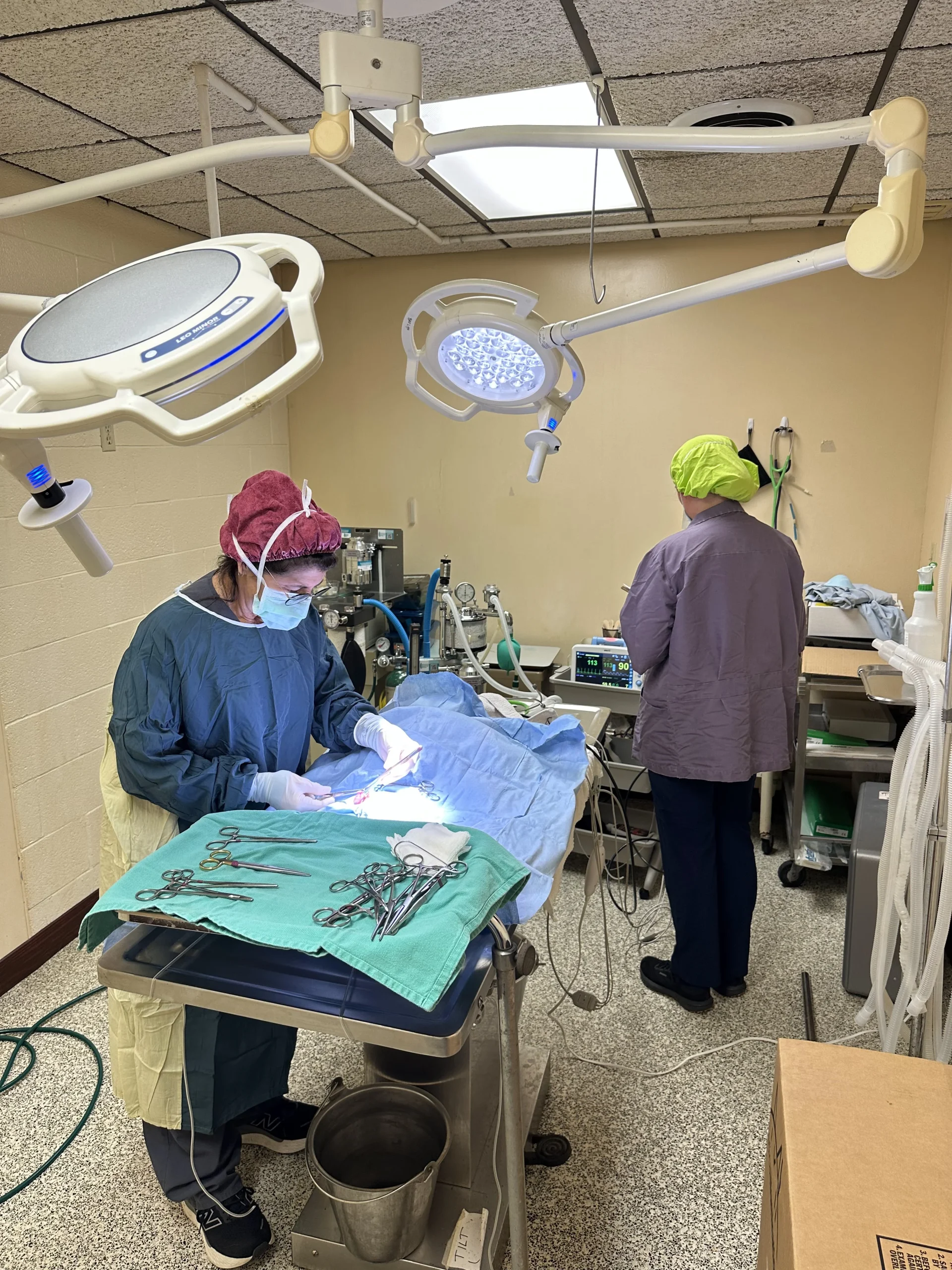
 We offer a variety of sift tissue and orthopedic procedures for dogs, cats and rabbits , and our location near OSU’s College of Veterinary Medicine makes surgical referrals practical and timely.
We also realize that it can be stressful to have your pet undergo surgery. We want to assure you that your pet is in good hands, and that we will do everything to provide the best care possible. High risk surgical patients all receive pre-anesthetic blood work, IV ports, fluid stabilization and complete real – time anesthetic monitoring by a trained assistant. Of course, these options are available upon request to everyone.
We will communicate with you about the things you need to know before, during, and after your pets’ surgery. It is our goal to make the entire process go smoothly, and to eliminate the stress and worry of surgical procedures. If you have any questions, comments, or concerns, please don’t hesitate to contact us today.
FAQs:
Q: What am I paying for when I have my pet spayed/neutered?
Spays and neuters are surgeries conducted in an aseptic operating room, with surgical tools that have been sterilized in our hospital grade autoclave machine. All team members going into surgery will be gowned, masked, and hair covered for sanitary purposes. The doctor will be using a sterile gown with sterile gloves along with a mask and hair cover.
In addition to the doctor performing the surgery, there will be an RVT (registered veterinary technician), or veterinary assistant dedicated to monitoring your pet’s anesthesia and vital signs. Other team members are on standby to assist if needed.
To start the process, using gentle fear-free techniques, an IV catheter will be placed. This catheter will be used to administer the surgical anesthetic. Your pet’s comfort is extremely important to us. We use a multi-modal approach to pain management for the best care during surgery and after.
Once your pet is anesthetized, they will be fitted with an endotracheal tube to receive oxygen and inhalant anesthesia. An RVT or veterinary assistant will then monitor your pet’s breathing, heart rate, temperature, blood pressure, oxygen saturation, and a few other vital signs. An RVT or veterinary assistant will also monitor the overall effects of the anesthesia to make sure your pet is at an appropriate anesthetic plane.
When surgery has been completed, your pet will be placed in a recovery space with a warming pad, where they will be monitored until they are awake and reactive.
When your pet is ready to go home, our doctor or RVT will review the surgery with you and discuss any questions or concerns you may have. You will also be given a written set of aftercare instructions, and a post-operative recheck appointment will be scheduled for your pet.
Q: Why would my pet need pre-anesthetic bloodwork?
For pets that are 8 years or older, there will be mandatory pre-anesthetic bloodwork done before the surgery. This will give us the information needed to make sure we use the most compatible anesthetics for your pet to ensure a successful surgery. You may elect to have this service for your pet at any age.
We will be able to know your pet’s white and red blood cell count, whether they are anemic, determine hydration and electrolytes, and assess their liver and kidney function values. This will give us insight into your pet’s blood clotting ability and the immune system’s ability to respond and help the body heal after the operation.
Pets that are 10 years and older are also required to have the pre-anesthetic bloodwork, and they will receive IV fluids to support sufficient blood pressure for a successful surgery.
Q: What is a Pain Package?
As stated above, pain management for your pet is one of our highest priorities. If your pet is in pain, they cannot heal properly. To that end, we will administer a pain injection that will last for 24 hours after surgery and give them oral pain medication to take home that will last for an additional 3 days.
Q: What if something goes wrong during surgery?
If your pet experiences an adverse effect to the anesthesia during surgery, the doctor can administer medications to potentially reverse the effects and use all life saving techniques at her disposal. CPR is not always successful, and we cannot guarantee that it will be – however, these incidents are very rare.
In conclusion, we provide your pets the same caliber of care that you would receive in a hospital. Our doctor and staff take your pet’s health, comfort, and well-being very seriously. We do everything possible to minimize risk to your pet, and to set them up for success in health going forward.
Q: Should I consider spaying and neutering major abdominal surgery?
YES, those are major abdominal surgeries, but because we do them every day you may think of them as simple procedures. If we removed foreign objects from dogs’ stomachs every day we would think of that the same way. Your vet is responsible for treating each spay and neuter candidate as an important and critical procedure. Each aspect from pre-anesthesia examinations to anesthesia monitoring to surgery to guided recovery should have its own importance to each team member. They are responsible for the success your pet experiences.